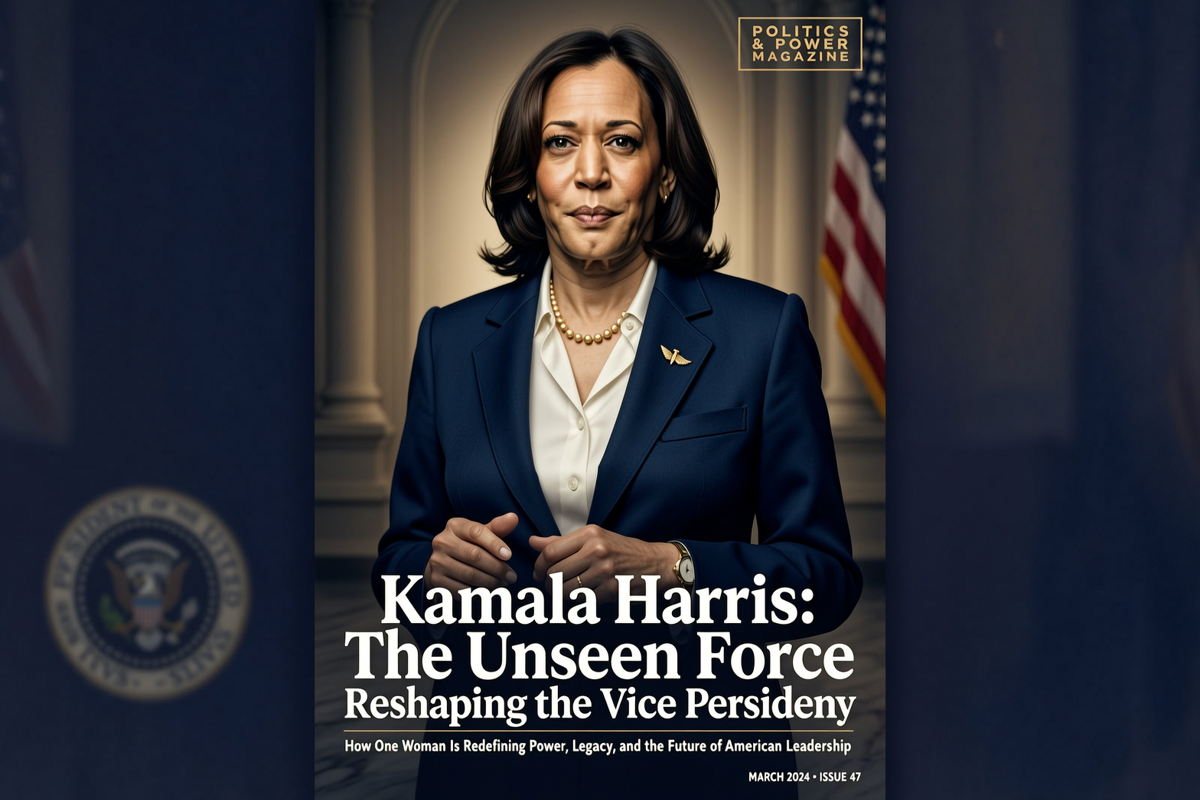
Kamala Harris: The Unseen Force Reshaping the Vice Presidency
Explore how Kamala Harris is redefining the role of Vice President, from breaking barriers to wielding influence on critical policy issues.
A New Blueprint for the Vice Presidency
When Kamala Harris took the oath of office on January 20, 2021, she shattered a glass ceiling that had stood for 244 years. As the first woman, first Black American, and first South Asian American to serve as Vice President, her presence alone signaled a historic shift. But beyond the symbolism, Harris has quietly been redefining what the vice presidency can be—moving from a largely ceremonial role to a powerhouse of policy influence, political strategy, and global diplomacy.
Harris entered an administration facing unprecedented challenges: a raging pandemic, economic turmoil, and a deeply divided nation. President Joe Biden tasked her with some of the most intractable issues, including voting rights, immigration reform, and the root causes of migration from Central America. While critics have often focused on the difficulties she has encountered, a closer look reveals a Vice President who has steadily built a record of substantive achievements and strategic maneuvering.
Breaking the Mold: From Ceremonial to Influential
Historically, the vice presidency has been a position of limited power, often described as “a heartbeat away from the presidency” but with little day-to-day authority. Harris has challenged that notion. She has leveraged her background as a former Attorney General of California and U.S. Senator to become a key player in the Biden administration’s legislative agenda. Her tie-breaking vote in the Senate has been crucial for advancing major bills, including the American Rescue Plan and the Inflation Reduction Act.
Moreover, Harris has used her platform to champion issues that resonate with the Democratic base but also appeal to a broader electorate. She has been a vocal advocate for reproductive rights, criminal justice reform, and climate action. Her ability to connect with diverse communities—from HBCU students to Asian American business owners—has made her an indispensable asset for the administration’s outreach efforts.
The Northern Triangle Challenge: A Test of Diplomacy
One of Harris’s most high-profile assignments has been addressing the root causes of migration from El Salvador, Guatemala, and Honduras. In June 2021, she visited Guatemala and Mexico, announcing a series of initiatives aimed at tackling corruption, violence, and economic insecurity. While the results have been mixed—migration numbers have fluctuated—the Vice President’s approach has been methodical. She secured commitments from U.S. companies to invest in the region, launched a task force on combating human smuggling, and pressed for anti-corruption reforms.
Critics argue that the situation on the ground has not improved dramatically, but supporters point out that the problems are deeply entrenched and cannot be solved overnight. Harris’s efforts have at least brought renewed attention to the region and laid the groundwork for long-term partnerships.
Voting Rights: A Moral Crusade
Perhaps no issue has defined Harris’s vice presidency more than voting rights. Following the 2020 election, states across the country passed restrictive voting laws, prompting a fierce battle in Congress. Harris became the administration’s point person on the issue, delivering impassioned speeches and meeting with activists, lawmakers, and civil rights leaders. She used her platform to push for the Freedom to Vote Act and the John Lewis Voting Rights Advancement Act, though both ultimately stalled in the Senate.
Despite the legislative setbacks, Harris’s advocacy has kept the issue in the national spotlight. She has traveled to key states, including Georgia and Texas, to mobilize voters and highlight the impact of restrictive laws. Her efforts have energized grassroots organizations and helped maintain pressure on lawmakers.
Global Diplomacy: Representing America Abroad
Harris has also taken on a significant role in foreign policy. She has represented the United States at major international events, including the Munich Security Conference and the ASEAN summit. Her meetings with world leaders—from French President Emmanuel Macron to Indian Prime Minister Narendra Modi—have been praised for their substance and warmth. She has focused on strengthening alliances, promoting democracy, and addressing global challenges like climate change and the COVID-19 pandemic.
In 2022, she visited Poland and Romania to reassure NATO allies amid Russia’s war in Ukraine. Her message of solidarity and commitment to the alliance was well-received, and she helped coordinate humanitarian assistance for Ukrainian refugees.
Managing Expectations and Criticisms
No vice president is without controversy, and Harris has faced her share. Critics have pointed to staff turnover in her office, perceived missteps in public appearances, and the difficulty of making progress on intractable issues like immigration. Some have questioned whether she is being positioned as the natural successor to Biden in 2024 or 2028.
However, those who work closely with her describe a disciplined and strategic leader who is constantly learning and adapting. She has built a team of experienced advisors and has focused on delivering results behind the scenes. Her approval ratings, while not stellar, are comparable to those of previous vice presidents at similar points in their terms.
The Road Ahead: A Vice President in Her Own Right
As the Biden administration enters its second half, Kamala Harris is poised to play an even more prominent role. With the 2024 election looming, she will be a central figure in the campaign, rallying the base and reaching out to swing voters. Her ability to articulate the administration’s achievements and contrast them with the opposition will be crucial.
More importantly, Harris is shaping the vice presidency for future generations. She has shown that the role can be a platform for advocacy, diplomacy, and policy-making, not just a waiting room for the top job. Whether she eventually runs for president or not, her tenure has already left an indelible mark on American politics.
In a polarized era, Kamala Harris stands as a figure of both historic significance and practical governance. She is not just a symbol; she is a force reshaping the second-highest office in the land.