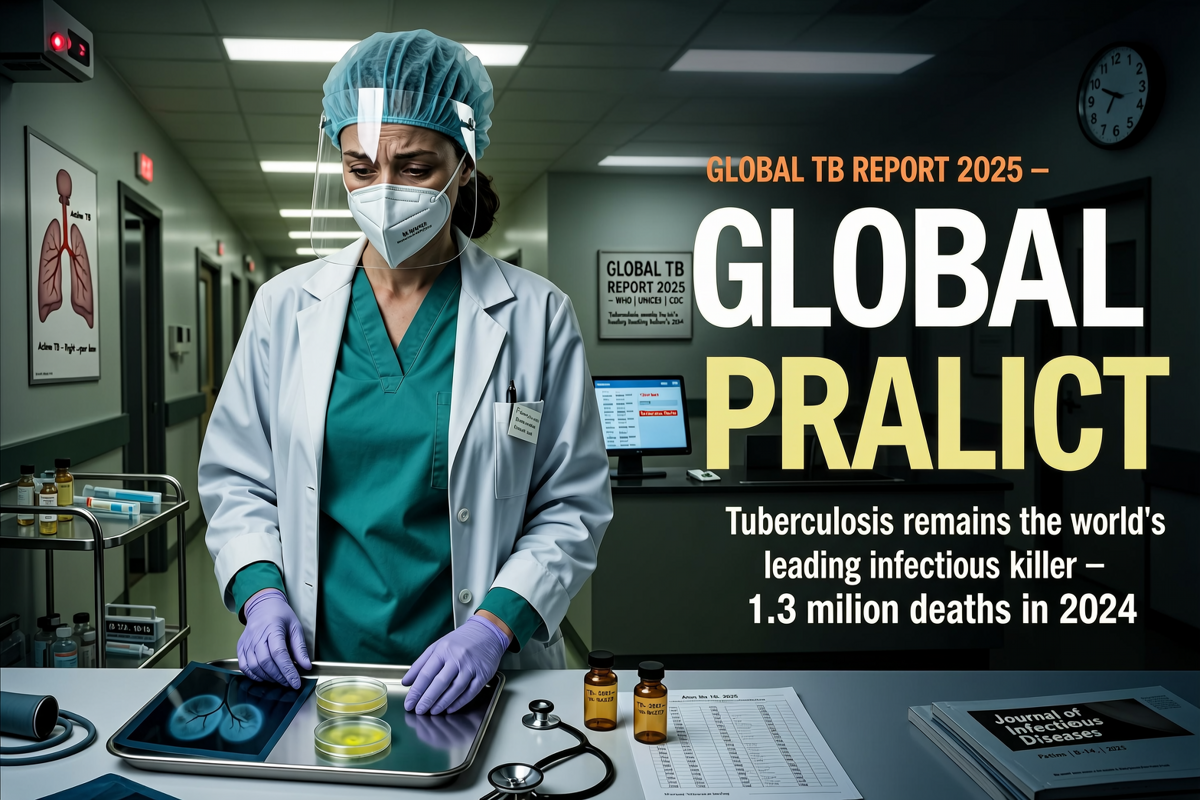
TBC Resurgence: Why Tuberculosis Remains a Global Threat in 2025
Despite being curable, tuberculosis (TB) continues to infect millions. Explore why TBC persists, drug resistance challenges, and what global health efforts mean for 2025.
The Silent Pandemic: Tuberculosis in 2025
When the world shifted focus to COVID-19, tuberculosis (TB) quietly continued its deadly march. In 2025, TB remains the world's deadliest infectious disease after COVID-19, killing over 1.5 million people annually. Despite being both preventable and curable, the ancient scourge persists due to a perfect storm of drug resistance, underfunding, and social determinants. This article explores the current state of TB, why it still evades eradication, and what the future holds for diagnosis and treatment.
Why TBC Isn't Going Away
TB is caused by Mycobacterium tuberculosis, which primarily attacks the lungs but can affect any organ. It spreads through airborne droplets when an infected person coughs or sneezes. One of the biggest challenges is latent TB: about one-quarter of the world's population is infected without showing symptoms. These individuals can later develop active TB, especially if their immune system weakens. In 2025, factors like HIV co-infection, malnutrition, and diabetes fuel TB's persistence in low- and middle-income countries.
The Drug Resistance Crisis
Multidrug-resistant TB (MDR-TB) and extensively drug-resistant TB (XDR-TB) are growing threats. Standard treatments last 6-9 months, but resistant strains require longer, more toxic regimens. In 2025, new shorter-duration treatments like the BPaL regimen (bedaquiline, pretomanid, linezolid) offer hope, but access remains limited. Drug resistance arises from incomplete treatment, poor healthcare infrastructure, and counterfeit medications. The World Health Organization (WHO) estimates that only about 60% of MDR-TB cases are successfully treated.
Diagnostic Innovations
Traditional sputum microscopy, over a century old, misses many cases. In 2025, molecular diagnostics like GeneXpert and whole-genome sequencing are becoming more widespread, allowing rapid detection of TB and resistance patterns. Portable, point-of-care devices are being deployed in remote areas. However, cost and maintenance remain barriers. New urine-based tests and breath analyzers are in development, aiming to simplify screening for active TB, especially in HIV-positive individuals.
Treatment Advances and Challenges
For drug-sensitive TB, the standard 6-month regimen with rifampin, isoniazid, pyrazinamide, and ethambutol remains effective but long. Shorter 4-month regimens are being tested, using fluoroquinolones. For MDR-TB, all-oral regimens are replacing injectables, reducing side effects. Yet, treatment success rates hover around 80% globally. Patient adherence is a major issue; directly observed therapy (DOT) and digital adherence technologies (like video-observed therapy) are helping but not universally implemented.
Global Funding and Political Will
TB is a disease of poverty. The WHO's End TB Strategy aims for a 90% reduction in TB deaths by 2030, but funding gaps persist. In 2025, the Global Fund to Fight AIDS, Tuberculosis and Malaria provides a significant portion of international financing, but domestic funding in high-burden countries is often insufficient. The COVID-19 pandemic diverted resources and disrupted TB services, leading to an estimated 500,000 additional TB deaths. Recovery is slow, and many countries are still catching up on missed diagnoses.
The Role of Vaccines
The only licensed TB vaccine, BCG, protects infants from severe forms but offers variable protection against pulmonary TB in adults. Several new vaccine candidates are in clinical trials, including M72/AS01E, which showed 50% efficacy in preventing progression from latent to active TB in a Phase 2b trial. In 2025, larger Phase 3 trials are underway, but a highly effective vaccine remains years away. A breakthrough vaccine could transform TB control, especially in high-burden settings.
Social Determinants and Stigma
TB thrives in overcrowded housing, poor ventilation, and malnutrition. Addressing these root causes is essential for elimination. Stigma also hinders care: many patients delay seeking treatment due to fear of discrimination. Community-based programs that provide psychosocial support and nutritional supplements have shown success in improving outcomes. In 2025, integrated approaches that combine medical treatment with social services are gaining traction.
What You Can Do
While TB may seem distant to readers in low-incidence countries, global travel means no one is immune. If you have a persistent cough, fever, night sweats, or weight loss, seek medical evaluation. Support organizations working on TB research and advocacy. On a policy level, advocate for sustained funding for global health programs. TB is a solvable problem—it requires political will, innovation, and equity.
Conclusion: A Path Forward
In 2025, TB remains a formidable foe, but the tools to defeat it exist. Scaling up diagnosis, shorter treatments, and addressing social determinants are key. The goal of ending TB by 2030 is ambitious but not impossible. Every step forward saves lives. As the world emerges from one pandemic, we must not forget another that has been with us for millennia.