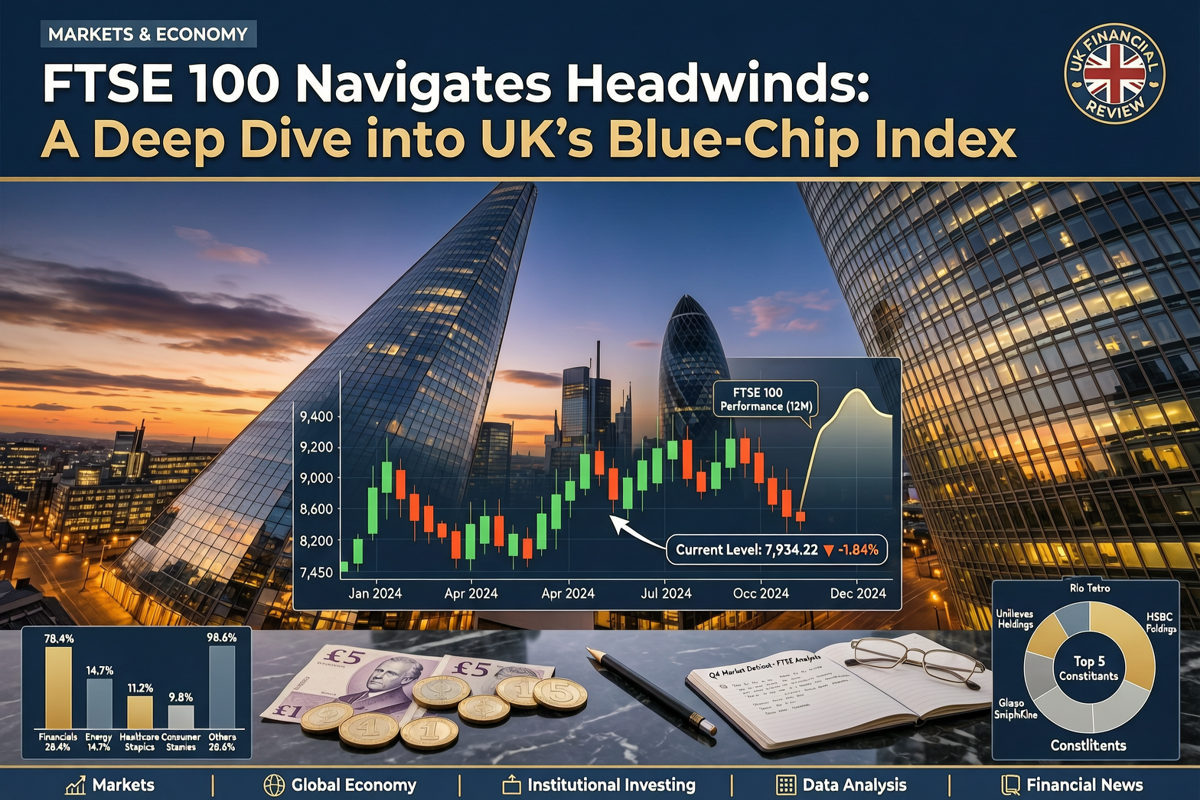
FTSE 100 Navigates Headwinds: A Deep Dive into UK's Blue-Chip Index
Explore the FTSE 100's recent performance, sector shifts, and investor sentiment amid global economic uncertainties. A comprehensive analysis of the UK's premier stock index.
Introduction: The Pulse of the UK Economy
The FTSE 100, often referred to as the 'Footsie,' is the benchmark stock index of the London Stock Exchange, comprising the 100 largest companies listed on the exchange by market capitalization. It is a bellwether for the UK economy, reflecting the health of key sectors such as finance, energy, healthcare, and consumer goods. In recent months, the index has faced a series of headwinds — from rising interest rates to geopolitical tensions — yet it continues to demonstrate resilience. This article delves into the current state of the FTSE 100, analyzing its performance, sectoral trends, and the factors that could shape its trajectory in the near future.
Recent Performance: A Tale of Two Halves
Over the past twelve months, the FTSE 100 has experienced significant volatility. After reaching a record high of approximately 8,000 points in early 2023, the index retreated amid concerns over persistent inflation and aggressive monetary tightening by the Bank of England. However, a recovery in energy stocks and a weaker pound boosted export-oriented companies, helping the index regain ground. As of mid-2025, the FTSE 100 hovers around 7,800 points, reflecting cautious optimism.
Key takeaways from recent performance:
- The index's yield has become attractive to income-focused investors, with an average dividend yield of around 4%.
- Defensive sectors like healthcare and utilities have outperformed growth-oriented sectors.
- Currency fluctuations have played a critical role, as many FTSE 100 companies derive revenue from overseas.
Sector Analysis: Winners and Losers
Energy and Commodities
The energy sector, including giants like Shell and BP, has benefited from elevated oil and gas prices. However, the transition to renewable energy and regulatory pressures pose long-term risks. Mining companies such as Rio Tinto and Glencore have also seen strong earnings due to rising metals demand.
Financials
Banks like HSBC, Lloyds, and Barclays have enjoyed higher net interest margins amid rising rate environments. Yet, concerns about loan defaults and a potential economic slowdown loom. The insurance sub-sector has remained stable, with companies like Aviva and Prudential offering steady returns.
Consumer Goods
Large consumer staples companies — Unilever, Diageo, Reckitt Benckiser — have faced input cost pressures but maintained pricing power. Luxury goods, represented by Burberry, have benefited from Chinese demand recovery. Conversely, retailers like Tesco and Sainsbury's face margin compression from competition and cost-of-living crisis.
Healthcare
Pharma and biotech firms, AstraZeneca and GlaxoSmithKline, have been resilient due to robust drug pipelines. The sector is seen as a defensive haven amid economic uncertainty.
Factors Influencing the FTSE 100
Several key drivers are shaping the index's direction:
- Monetary Policy: The Bank of England's rate decisions directly impact borrowing costs and corporate profitability. Recent pauses in rate hikes provided relief, but any reversal could trigger sell-offs.
- Brexit Fallout: Trade frictions with the EU continue to affect supply chains and regulatory compliance. The FTSE 100's global exposure mitigates some domestic pain, but currency volatility adds complexity.
- Global Economic Health: Weakness in China, the US, and Europe can reduce demand for UK exports. Conversely, a strong global recovery would boost commodity and industrial sectors.
- Political Stability: Domestic political uncertainty, including elections or policy shifts, can spook investors. The current government's focus on fiscal discipline has been viewed positively by markets.
Outlook: Cautious Optimism with Risks
Analysts remain divided on the FTSE 100's near-term prospects. On the positive side, attractive valuations relative to US peers, high dividends, and a relatively stable political environment support the index. However, structural challenges such as low productivity growth, aging infrastructure, and the transition to net-zero emissions could dampen long-term returns.
Potential scenarios:
- Bull Case: A soft landing for the UK economy, interest rate cuts in 2026, and strong global demand push the FTSE 100 to 8,500 points.
- Bear Case: Recession in the UK, persistent inflation, and geopolitical shocks (e.g., escalation in Ukraine or Middle East) drag the index below 7,000 points.
Investors are advised to maintain a diversified portfolio, focusing on high-quality blue chips with pricing power and solid balance sheets. The FTSE 100's historical resilience suggests it may weather near-term storms, but patience is key.
Conclusion
The FTSE 100 remains a cornerstone of the global investment landscape, offering exposure to some of the world's largest and most diversified companies. While headwinds persist, the index's defensive characteristics and attractive yields provide a buffer. As the UK economy navigates a complex post-pandemic, post-Brexit reality, the FTSE 100 will continue to reflect the nation's economic pulse. For investors, understanding the interplay of sector dynamics, monetary policy, and global trends is essential to capturing opportunities and managing risks in this ever-evolving market.