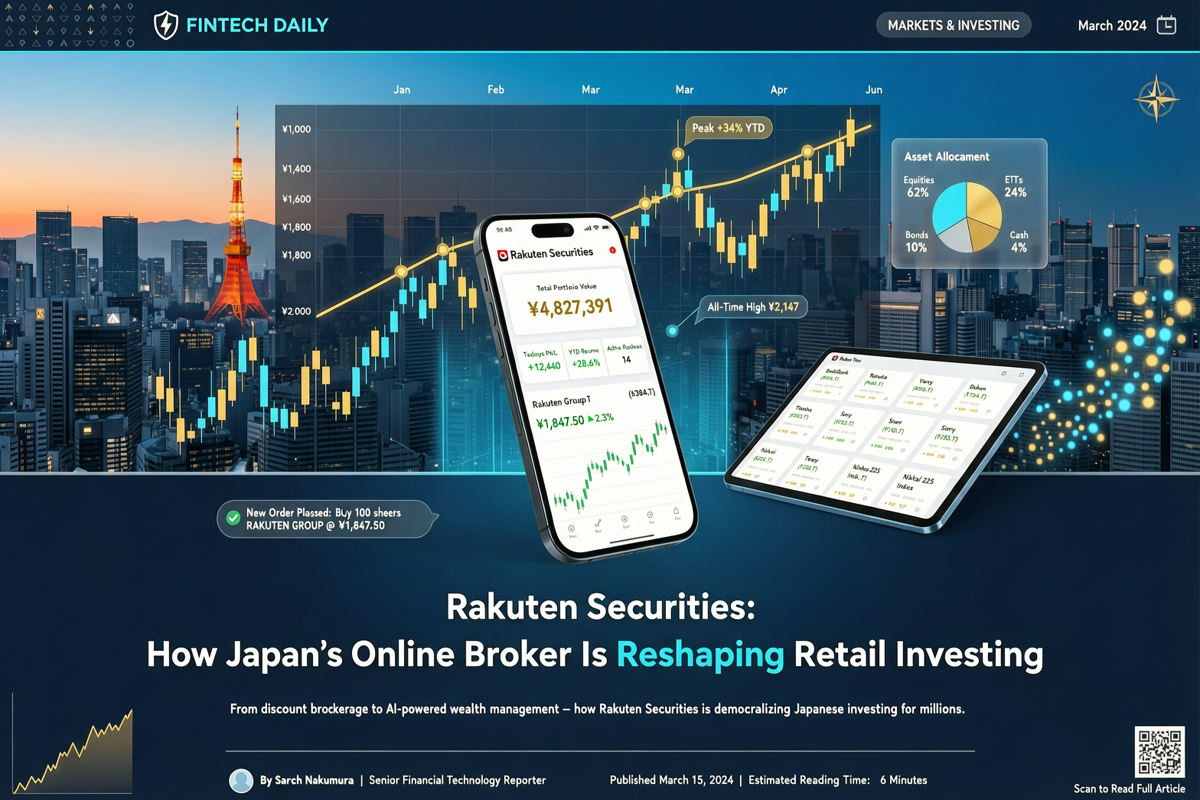
Rakuten Securities: How Japan's Online Broker Is Reshaping Retail Inve
Discover how Rakuten Securities leverages low fees, tech innovation, and ecosystem synergies to empower Japan's retail investors in a rapidly evolving market.
The Rise of Rakuten Securities in Japan's Brokerage Landscape
Japan's securities industry has long been dominated by traditional giants like Nomura and Daiwa. Yet over the past decade, a digital disruptor has quietly captured the attention of retail investors: Rakuten Securities. As the online brokerage arm of the e-commerce conglomerate Rakuten Group, the firm has carved out a distinct niche by combining ultra-low commissions with seamless integration into the Rakuten ecosystem. This article explores how Rakuten Securities is transforming the way everyday Japanese investors approach the stock market.
Low Costs, High Accessibility
The most visible advantage of Rakuten Securities is its fee structure. For Japanese investors, trading costs can eat into returns, especially for frequent traders. Rakuten Securities addressed this head-on by offering zero commission for certain stock trades and some of the lowest margin rates in the industry. This pricing strategy has attracted a wave of new retail investors who previously found the cost of entry prohibitive. By lowering the barrier, the firm has democratized access to equities, ETFs, REITs, and even foreign stocks.
Seamless Ecosystem Integration
Rakuten Securities doesn't operate in a silo. It is deeply woven into the broader Rakuten web of services, which includes e-commerce, banking, credit cards, and telecom. For example, users can link their Rakuten Securities account with Rakuten Bank to enjoy instant fund transfers or use Rakuten Card points to invest. This ecosystem creates a sticky user experience: customers who shop on Rakuten Ichiba or use Rakuten Mobile are naturally inclined to open a brokerage account. The synergy also allows Rakuten Securities to cross-sell products and gather data to personalize investment recommendations.
Technology and User Experience
Technology is at the core of Rakuten Securities' appeal. Its mobile app and web platform are designed for simplicity, catering to both novice and experienced traders. Features include real-time quotes, advanced charting, automated trading via iSPEED (a proprietary platform), and a user-friendly interface that reduces the learning curve. In a country where many brokerages still rely on paper-heavy processes, Rakuten Securities' digital-first approach has been a breath of fresh air. Moreover, the firm offers robo-advisory services under the brand "Rakuten Wrap," which targets passive investors seeking automated portfolio management.
Expanding into New Asset Classes
Rakuten Securities has also been proactive in expanding its product range. It was among the first Japanese brokerages to offer trading in cryptocurrencies and CFDs, tapping into the growing appetite for alternative investments. The launch of the Rakuten Wallet for crypto trading and the provision of foreign exchange margin trading (FX) have diversified revenue streams. This broadening of asset classes ensures that investors can manage a wider portfolio within a single platform, reducing the need to open multiple accounts.
Regulatory Challenges and Market Position
Despite its success, Rakuten Securities faces headwinds. The Japanese Financial Services Agency (FSA) has tightened regulations around leveraged trading and crypto assets, forcing the firm to adjust its offerings. Additionally, competition is intensifying from other online brokers like SBI Securities and Monex, as well as from neobanks entering the investment space. However, Rakuten Securities benefits from the massive user base of the parent company—over 100 million Rakuten members—which provides a built-in acquisition channel. As of 2024, the firm ranks among the top three online brokerages in Japan by number of accounts, with over 5 million.
Impact on Retail Investing Culture
The influence of Rakuten Securities extends beyond numbers. It has contributed to a broader shift in Japanese investing culture. Historically, Japanese households held a disproportionate amount of their savings in cash or low-yielding bank deposits. By making investing accessible and affordable, Rakuten Securities, along with peers, has encouraged a move toward equity investment. The introduction of NISA (Nippon Individual Savings Account) tax-efficient accounts further turbocharged this trend. Rakuten Securities has been a vocal advocate for financial literacy, offering educational content and webinars to help users navigate the market.
Future Outlook
Looking ahead, Rakuten Securities is expected to deepen its technology investments, particularly in AI for personalized advice and risk management. The integration with the upcoming Rakuten Group's financial super-app—combining banking, securities, insurance, and payments—could create an unparalleled one-stop financial hub. Additionally, as Japan's government pushes for household asset formation (e.g., expanding NISA limits), Rakuten Securities is well-positioned to capture a larger share of the retail flow. The firm must, however, remain vigilant about security and compliance in an era of increasing cyber threats.
In conclusion, Rakuten Securities is more than just a low-cost broker; it is a platform that embodies the digital transformation of Japan's financial services. By leveraging the strengths of its ecosystem, embracing innovation, and focusing on the needs of the retail investor, it has set a new standard for what a brokerage can be. For anyone looking to understand the future of investing in Japan, watching Rakuten Securities offers a clear mirror of the changes underway.