Credit Score Decoded: What Actually Moves Your Number
Credit scores are three-digit risk snapshots, not permanent grades. Learn what moves them, why apps disagree, and which habits actually help.
A credit score is often treated like a permanent grade—something handed down by mysterious agencies. In reality, it is a snapshot: a three-digit estimate of how likely you are to repay borrowed money on time. It changes as your accounts change, and understanding the inputs is more useful than chasing a perfect number.
What a credit score is—and isn’t
Most U.S. lenders use scores built from credit bureau data, usually FICO or VantageScore. Both typically run from 300 to 850. The score summarizes patterns in your credit reports: whether you pay on time, how much revolving credit you use, how long you’ve managed accounts, and how often you seek new credit. It does not know your salary, savings, or job title. A high income can make life easier, but it won’t erase late payments.
The score is also not a single universal figure. Each bureau—Equifax, Experian, and TransUnion—keeps its own file, and lenders use different scoring models. That’s why the score in your banking app may differ from the one a car dealer sees.
The five levers that move most scores
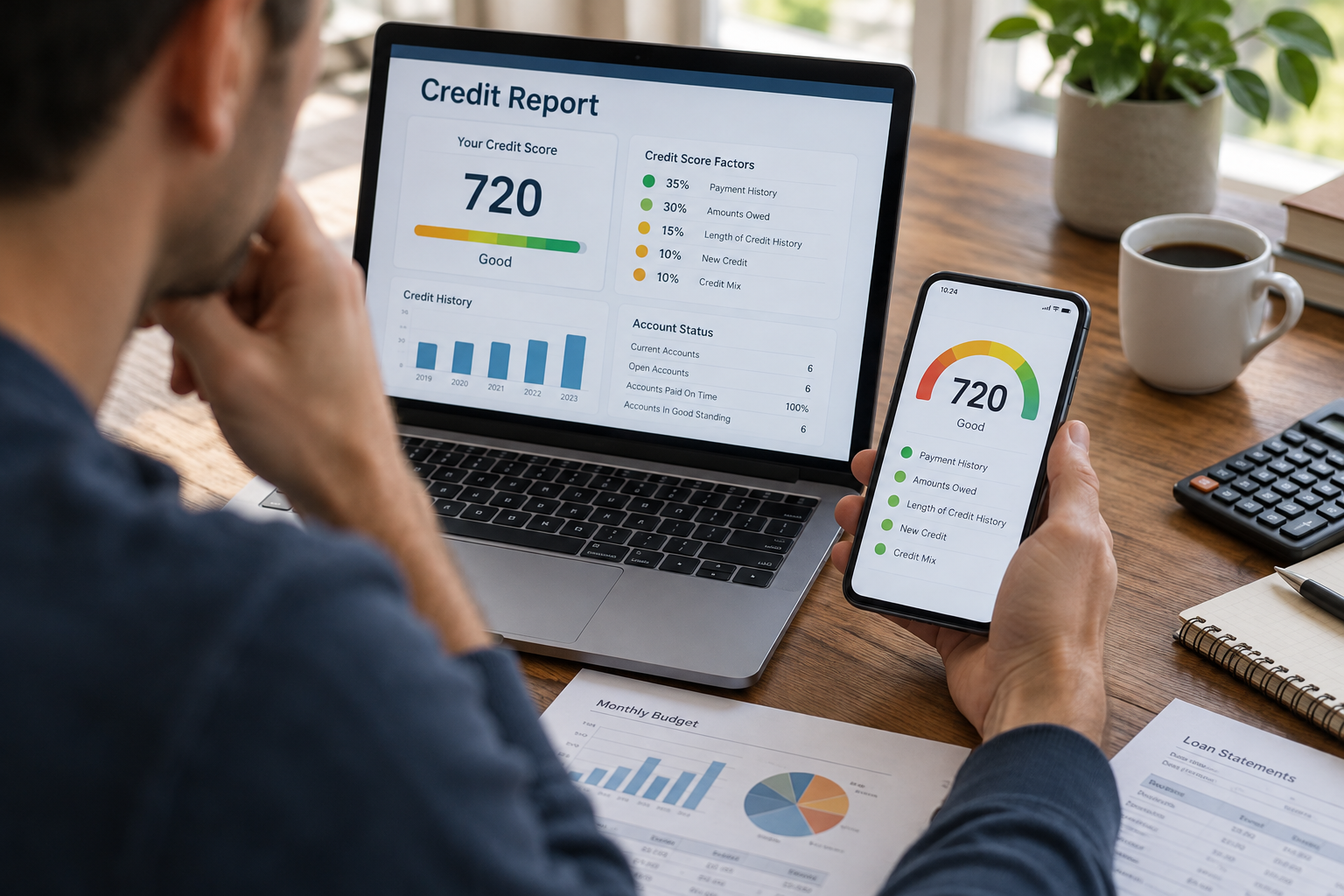
FICO’s widely cited breakdown is a useful map, even though VantageScore weights things somewhat differently.
- Payment history (about 35%). A single missed payment can sting, especially if it is recent and the account was already past due. Set autopay for at least the minimum, then review it before every due date.
- Amounts owed (about 30%). This is mostly credit utilization—the share of your revolving limits you’re using. Maxing one card can hurt even if other cards sit at zero. Both overall and per-card utilization matter.
- Length of credit history (about 15%). Older accounts help because they show a longer track record. Closing your oldest card can shorten that history and reduce total available credit.
- New credit (about 10%). Each hard inquiry from a card or loan application can shave a few points, though the effect fades. Mortgage and auto rate shopping are often grouped within a short window, so multiple quotes count as one inquiry under some models.
- Credit mix (about 10%). A blend of card and installment accounts can help slightly, but don’t take on debt just to diversify.
Why your score differs from app to app
Three things explain most discrepancies. First, the model: a FICO Score 8 from one bureau is not the same as a VantageScore 3.0. Second, timing: a payment reported to one bureau may not have reached another. Third, the data itself: a collections account or a closed card may appear in one file and not another.
For practical purposes, watch the trend rather than the exact number. A 12-point dip after a hard inquiry is noise; a 60-point drop after a missed payment is a signal.
Habits that beat credit “hacks”
Most score improvement comes from boring consistency. Pay every bill on time. Keep utilization below 30% if you can, and below 10% if you’re preparing for a major loan. Leave old accounts open when they cost nothing and you can manage them. Check your reports for errors at least once a year through AnnualCreditReport.com, the federally authorized site. Dispute genuine mistakes with the bureau and the lender.
If you’re rebuilding, a secured card or credit-builder loan can add positive payment history. Use them lightly, pay in full, and avoid fees that outweigh the benefit.
A simple 90-day routine
- Month one: Pull all three reports. List every account, balance, and limit. Flag anything you don’t recognize.
- Month two: Set autopay for every account. Pay down the card with the highest utilization first.
- Month three: Ask for a limit increase on a card you’ve handled well—without a hard inquiry if the issuer allows it. Recheck your reports.
Myths that can cost you
“Carrying a balance builds credit.” No. Paying on time builds credit; interest does not. Pay the statement balance in full to avoid interest.
“Checking your own score hurts it.” Checking your own score is a soft inquiry and does not affect your score. Only applications for new credit typically trigger hard inquiries.
“Closing a card always helps.” Closing a card can raise utilization and shorten history. It may help if the card tempts you into debt or charges an annual fee you don’t use—but consider the trade-off first.
“Debit cards build credit.” Usually they don’t report to bureaus. A secured credit card or credit-builder loan does.
The bottom line
A credit score is a financial reputation score, not a verdict on your character. It rewards steady payments, moderate borrowing, and a long, clean record. You don’t need a perfect 850 to get good terms; you need a score that tells lenders you’re predictable. Focus on the levers you control, check for errors, and give changes a few billing cycles to show up.