Pawn Shop Loans: How Collateral Lending Really Works
A pawn loan is fast, credit-check-free cash—but the interest can top 200% a year. Here's how pawning works, what it costs, and safer alternatives.
The Original Collateral Loan
Pawn shops are among the oldest lending institutions on earth, and the model hasn't changed much in 3,000 years: you hand over something valuable, you get cash, and you get the item back when you repay. No credit check, no pay stub, no waiting. That simplicity is exactly why millions of Americans still use pawn loans every year — and exactly why the costs can sting.
How a Pawn Loan Actually Works
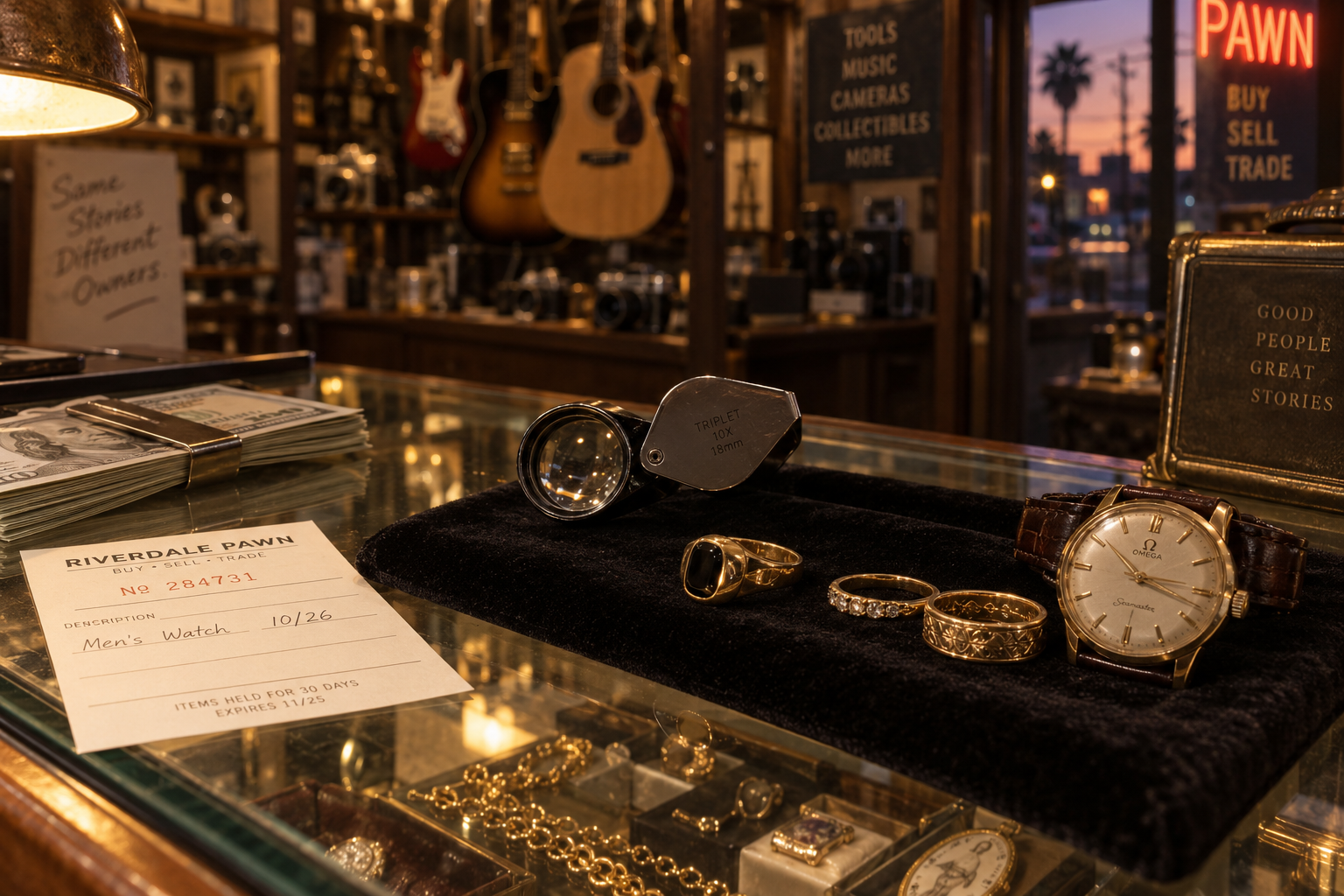
The typical transaction takes 15 to 30 minutes and follows a predictable script. You bring in an item — gold jewelry, a watch, a laptop, a guitar, power tools, a game console — and a clerk appraises it.
- Appraisal: The pawnbroker looks at resale value, not what you paid. Expect an offer of roughly 25% to 60% of what the shop could sell it for.
- The ticket: Your loan agreement states the amount, the interest rate, the term (usually 30 days), and the grace period.
- Storage: The shop holds the item. You get a claim ticket — lose it and you may need extra ID to redeem.
- Redemption or renewal: Pay the principal plus fees by the due date, or pay the interest to roll the loan another month.
Most states also require pawnbrokers to record your government ID, and many require a thumbprint or photograph. Transactions get reported to law enforcement databases so stolen goods can be traced.
What a Pawn Loan Really Costs
This is where pawn loans get expensive. State law sets the ceiling, and the ceilings vary wildly. Some states cap monthly interest at just 2% to 5%; others allow 20% or more per month. At 20% per month, the annual percentage rate tops 240% — higher than many payday loans.
Because the loan is small, the dollar cost looks manageable. Industry groups put the average pawn loan at roughly $150. If you borrow $150 at 20% per month and roll it for three months, you'll pay about $90 in interest to keep a $150 loan alive — on an item the shop might resell for $300.
One saving grace: pawn loans are non-recourse. If you default, the shop keeps the collateral and the debt is generally wiped out. There's no collections call, no wage garnishment, and typically no report to the credit bureaus — for better or worse, a pawn loan usually won't help or hurt your credit score.
What Happens When You Can't Pay
Most states build in a grace period, often 30 days beyond the initial term, during which you can still redeem by paying the full balance. After that, the item is forfeited and goes on the sales floor.
Some shops offer extensions or partial payments; policies vary. If the item has sentimental value, ask about the redemption window before you sign — not after the deadline passes.
Pawning vs. Selling Outright
Here's a math check most borrowers skip: if a shop will lend you 40% of resale value but buy the item for 60%, selling outright puts more cash in your pocket today. Pawning makes sense only when you genuinely intend — and can afford — to get the item back.
The Auto Title Loan Cousin
Some pawn shops also offer auto title loans, using your car's title as collateral while you keep driving. These are a different animal: rates can exceed 300% APR, the loan is usually recourse (you can lose the car and still owe), and default can mean repossession. If a pawn shop pitches a title loan, treat it as a high-risk product, not a quick fix.
Smarter Alternatives to Try First
- Credit union small-dollar loans: Many offer Payday Alternative Loans (PALs) with APRs capped around 28%.
- Employer advances: A simple request to HR or an earned-wage access app can cover a short gap.
- Buy now, pay later: For a specific purchase, 0% installment plans beat pawning an asset.
- Nonprofit and community help: United Way's 211 line and local faith organizations often have emergency funds.
- Negotiating bills: Utilities, medical offices, and landlords frequently offer payment plans that cost nothing.
Buying From a Pawn Shop: The Other Side
Pawn shops sell electronics, instruments, tools, and jewelry at 30% to 70% below retail. Because of mandatory holding periods and police reporting, the risk of buying stolen goods is lower than most people assume — but not zero. Ask for a receipt, check serial numbers, and confirm the return policy, which is often "as is."
The Bottom Line
A pawn loan is fast, private, and available when banks say no — a genuine lifeline for the underbanked. But it's also one of the most expensive ways to borrow, and the true price is measured in the things you'd hate to lose. Use it for a short, certain gap you can repay on time — never as a long-term fix.