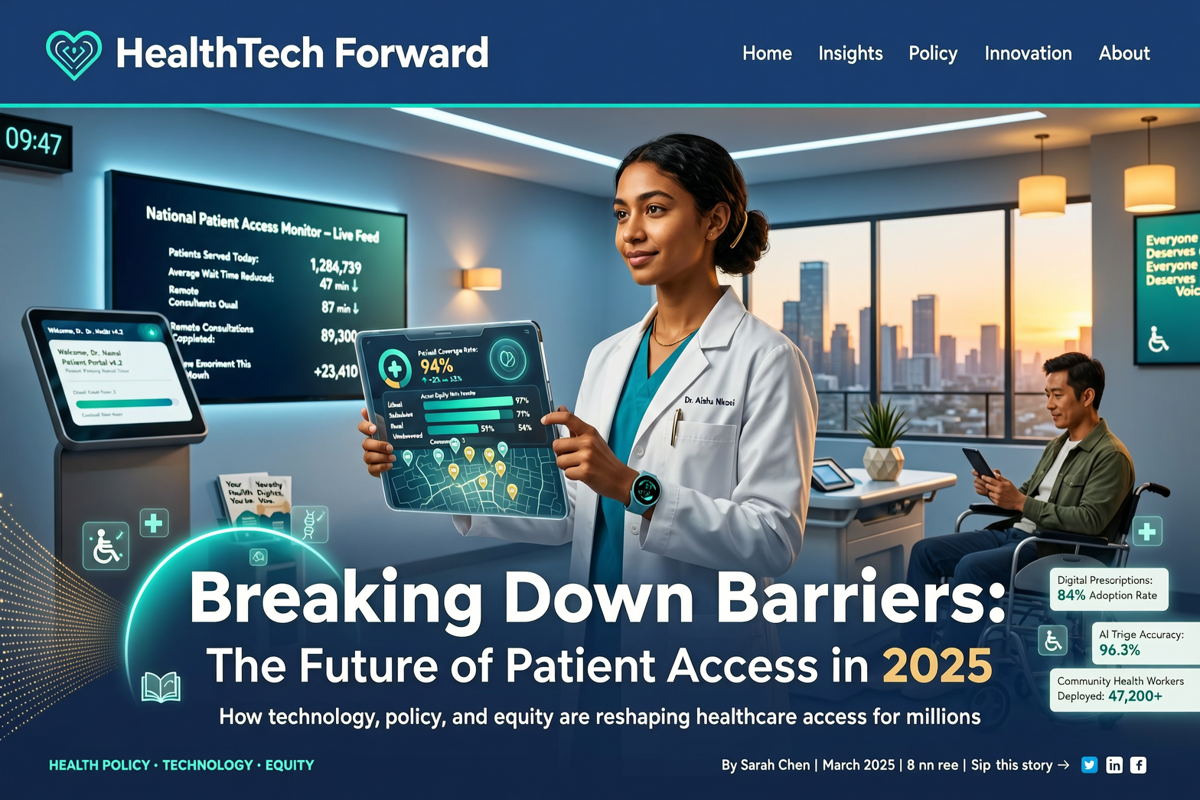
Breaking Down Barriers: The Future of Patient Access in 2025
Explore how technology, policy changes, and patient-centered care are transforming patient access to healthcare services in 2025.
Introduction: The Changing Landscape of Patient Access
Patient access—the ability of individuals to obtain timely, affordable, and appropriate healthcare services—has long been a cornerstone of effective health systems. In 2025, the concept is undergoing a radical transformation driven by digital innovation, regulatory reforms, and a shift toward value-based care. This article explores the key trends reshaping patient access and what they mean for patients, providers, and payers.
Telehealth Expands Beyond the Pandemic
Telehealth, once a stopgap during COVID-19, is now a permanent fixture. In 2025, virtual consultations are not just for minor ailments; they encompass chronic disease management, mental health therapy, and even specialist referrals. States have enacted permanent telehealth parity laws, ensuring insurers reimburse virtual visits at the same rate as in-person care. For patients in rural areas or with mobility challenges, this means reduced travel time and quicker access to specialists. However, the digital divide remains a concern, prompting initiatives to provide low-cost internet and devices to underserved populations.
AI-Powered Scheduling and Navigation
Artificial intelligence is streamlining the patient journey. AI-driven scheduling platforms now predict no-show risks and optimize appointment slots, reducing wait times by up to 30%. Chatbots equipped with natural language processing help patients find the right provider, understand insurance coverage, and complete pre-visit paperwork. For example, a patient with chest pain can use a symptom checker that triages urgency and books an appropriate appointment within minutes. These tools are particularly beneficial for non-English speakers, as multilingual AI assistants bridge language gaps.
Price Transparency and Cost Estimators
Federal price transparency rules, fully implemented by 2025, require hospitals and insurers to publish negotiated rates for common procedures. Patients can now use online cost estimator tools to compare prices across facilities before scheduling. This empowers consumers to make informed decisions, potentially saving thousands of dollars. However, the complexity of medical billing still poses challenges; third-party apps are emerging to translate raw pricing data into user-friendly estimates, factoring in deductibles and out-of-pocket maximums.
Interoperability and Health Information Exchange
Seamless data sharing is critical for patient access. The 21st Century Cures Act's interoperability mandates have led to widespread adoption of FHIR (Fast Healthcare Interoperability Resources) standards. Patients can now access their complete medical records via smartphone apps, and providers can view a patient's history across different health systems. This reduces redundant tests and speeds up diagnosis, especially for patients with complex conditions. Yet, privacy concerns persist, and regulators are tightening rules around data use to prevent unauthorized sharing.
Value-Based Care and Preventive Access
The shift from fee-for-service to value-based care models incentivizes providers to keep patients healthy rather than simply treating illness. Accountable care organizations (ACOs) now offer expanded preventive services, such as free annual wellness visits, vaccinations, and screenings. Patients in these models report easier access to primary care, with same-day appointments for acute issues. Additionally, community health workers and patient navigators help high-risk individuals overcome social barriers like transportation or food insecurity, linking them to non-medical support services.
Policy Innovations: Medicaid Expansion and Public Options
Several states have adopted Medicaid expansion or created public option plans to cover low-income residents. In 2025, these initiatives have reduced the uninsured rate to historic lows. Public option plans often feature lower premiums and deductibles, with networks that include major hospitals. Meanwhile, policies like the No Surprises Act continue to protect patients from unexpected out-of-network bills, particularly in emergencies. Advocacy groups are pushing for further reforms, including caps on insulin prices and expanded coverage for mental health and substance use disorder treatment.
Challenges Ahead: Equity and Sustainability
Despite progress, disparities persist. Racial and ethnic minorities, rural residents, and low-income individuals still face barriers such as limited provider availability, language barriers, and implicit bias. Addressing these requires targeted investments in community health centers, diversity in the healthcare workforce, and culturally competent care models. Additionally, the financial sustainability of expanded access is a concern as healthcare costs continue to rise. Policymakers are exploring value-based payment models and drug pricing reforms to contain costs without compromising access.
Conclusion: A Patient-Centered Future
Patient access in 2025 is more than just scheduling an appointment; it encompasses affordability, convenience, and equity. Technology, policy, and a renewed focus on patient experience are breaking down traditional barriers. While challenges remain, the trajectory is clear: healthcare systems are evolving to meet patients where they are, ensuring that everyone has a fair opportunity to achieve optimal health. As these trends continue, the ultimate goal—seamless, timely, and compassionate care—moves closer to reality.