Wells Fargo's Digital Pivot: Rebuilding Trust One App at a Time
Explore how Wells Fargo is leveraging digital innovation to restore customer confidence after its scandal-ridden past, focusing on mobile banking, cybersecurity, and community engagement.
From Scandal to Transformation
For years, Wells Fargo was synonymous with banking scandals—fake accounts, improper fees, and regulatory fines that cost billions. But behind the headlines, the San Francisco-based giant has been quietly engineering one of the most ambitious digital overhauls in the industry. Today, Wells Fargo is betting that technology, not just apologies, can rebuild the trust it lost.
The bank's journey began in earnest after the 2016 cross-selling scandal, which exposed systemic fraud. Under new leadership, Wells Fargo launched a multi-year digital transformation aimed at simplifying customer experiences, enhancing security, and proving that a legacy institution can innovate like a fintech startup. The results are beginning to show: mobile banking adoption surged, customer satisfaction scores are slowly climbing, and the bank is once again a contender in the race for digital supremacy.
Redefining the Mobile Experience
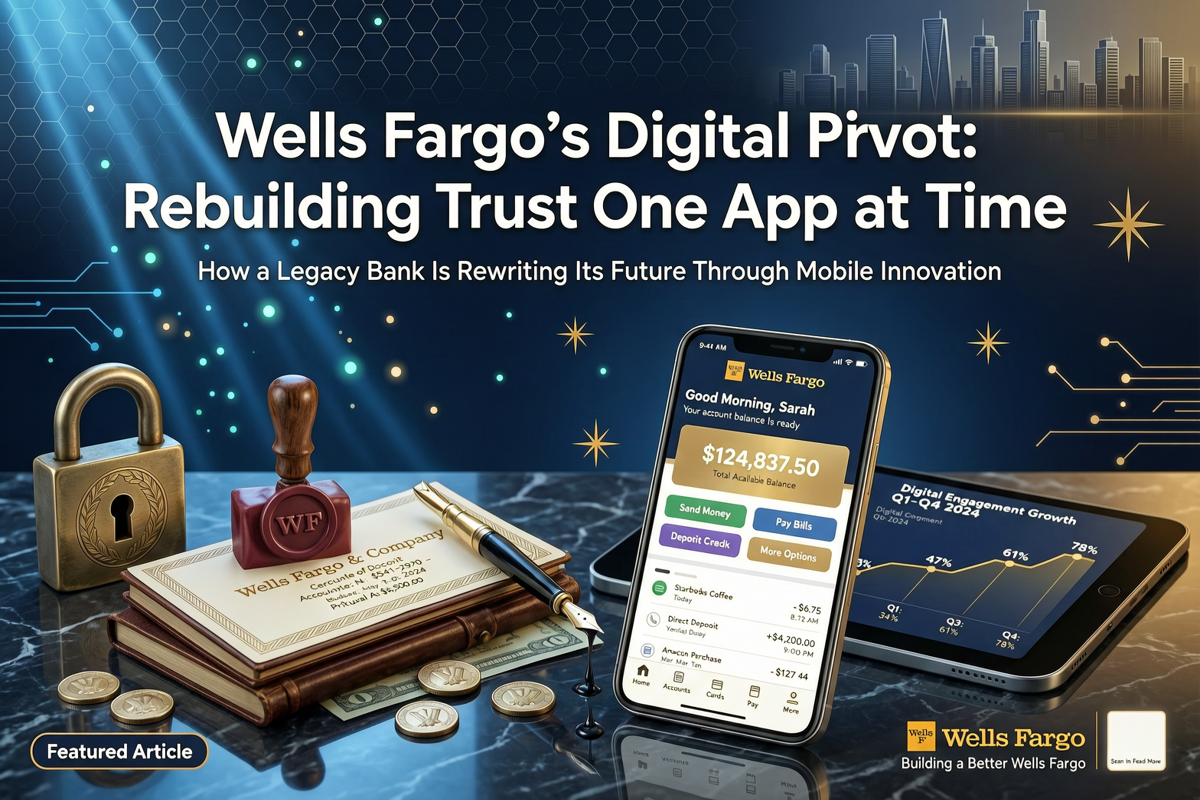
At the heart of Wells Fargo's revival is its mobile app. Over the past three years, the bank has introduced features that rival those of neobanks: real-time notifications, card controls, and the ability to lock or unlock debit cards from the phone. The app now supports Zelle for instant person-to-person payments, and early adopters can use voice commands to check balances or transfer funds.
But the flagship innovation is the Wells Fargo Digital Wallet, which integrates with Apple Pay, Google Pay, and Samsung Pay. Customers can also deposit checks via photo capture, schedule payments, and set up budgeting tools that categorize spending. The bank reports that over 60% of its retail customers now use mobile banking regularly, a metric that rivals top digital-only banks.
Personalized Financial Insights
Beyond basic transactions, Wells Fargo uses AI to offer personalized insights. The app analyzes spending patterns to alert users about unusual charges or potential savings. For example, if a customer spends heavily on dining out, the app might suggest a dining rewards card or a cash-back offer at a partner restaurant. This level of customization was unthinkable five years ago, but it's now a key differentiator.
Fortifying Cybersecurity
Trust is fragile, especially after a scandal. Wells Fargo has invested heavily in cybersecurity to protect customer data and prevent fraud. The bank now uses machine learning to detect suspicious activity in real time, blocking transactions that deviate from a customer's typical behavior. Multi-factor authentication is standard, and the app supports biometric login via fingerprint or facial recognition.
In 2023, Wells Fargo launched a Digital Security Guarantee, promising to cover all losses from unauthorized transactions if customers follow recommended security practices. This move mirrors similar pledges from competitors like Chase and Bank of America, but for Wells Fargo, it carries extra weight—a promise to never again let security lapses undermine customer faith.
Community Banking Reimagined
While digital is the focus, Wells Fargo hasn't forgotten its branch network. The bank is redesigning branches as neighborhood financial centers that blend digital tools with human advice. Tellers now use tablets to open accounts on the spot, and ATMs feature envelope-free deposits and video banking for complex transactions. The goal is to offer branches that are as efficient as an app, but with the warmth of face-to-face service.
In underserved communities, Wells Fargo has piloted mobile branch units—converted RVs that bring banking services to areas lacking physical locations. This initiative, part of a $200 million community reinvestment plan, aims to build goodwill and address past criticisms of predatory lending in minority neighborhoods.
Business Banking and Innovation
Wells Fargo is also targeting small businesses with digital tools. The Wells Fargo Business Mobile app now allows owners to deposit checks, manage cash flow, and apply for loans—entirely online. The bank launched Wells Fargo FastForward, a digital lending platform that uses AI to underwrite small business loans in minutes, not weeks. Since its debut, FastForward has approved over $1 billion in loans to businesses that might have been overlooked by traditional credit models.
For larger corporate clients, Wells Fargo has rolled out API-based banking, enabling companies to integrate payment and account services directly into their own software. This open-banking approach positions the bank as a technology partner, not just a lender.
Measuring the Impact
Numbers tell a promising story. Wells Fargo's digital adoption index has climbed 15% since 2020, and its retail customer satisfaction score hit a five-year high in the latest J.D. Power survey. While net income remains pressured by low interest rates and regulatory costs, digital revenue—including fees from digital services and interchange—is growing.
But the ultimate metric is trust. According to a 2023 investor presentation, Wells Fargo regained its position as the most trusted major bank among millennials, a demographic that values digital convenience and transparency. This is a remarkable turnaround for an institution that only six years ago was facing public outrage.
Challenges Ahead
Despite progress, Wells Fargo can't rest. Competitors like JPMorgan Chase and Bank of America are also investing billions in technology, and fintechs like SoFi and Chime continue to steal market share. Regulatory constraints remain; the Federal Reserve's asset cap, imposed after the scandal, still limits growth. Wells Fargo must also navigate ongoing lawsuits over mortgage and auto lending practices.
Moreover, the digital pivot requires constant adaptation. Cybersecurity threats evolve, and customer expectations rise with every new app launch. The bank must balance innovation with caution, ensuring that speed doesn't compromise security or compliance.
Conclusion
Wells Fargo's story is far from over. The bank is proving that even the most tarnished legacy can be polished with the right tools—and technology is the most powerful tool of all. By putting customer experience and security at the center of its digital strategy, Wells Fargo is not just rebuilding trust; it's redefining what a traditional bank can be in the 21st century. The road ahead is long, but the direction is clear: digital first, trust always.