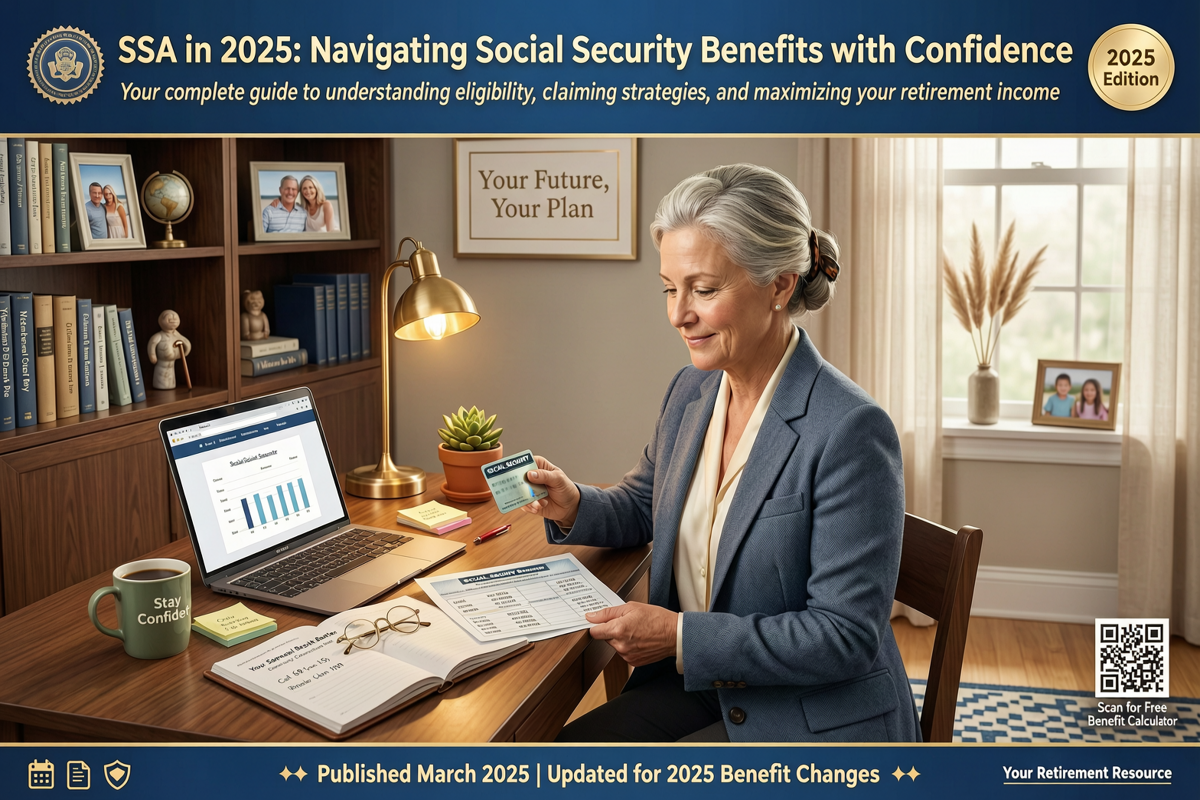
SSA in 2025: Navigating Social Security Benefits with Confidence
What is the SSA and how does it affect you in 2025? Explore retirement, disability, and survivor benefits, plus application tips and common myths.
The Social Security Administration (SSA) stands as one of the most important federal agencies for millions of Americans. Yet, few people truly understand how it works. As we move through 2025, the SSA continues to evolve, and staying informed is essential for making the most of your benefits. This article breaks down the SSA's role, key benefits, recent changes, and common misconceptions to help you plan with confidence.
What Does the SSA Actually Do?
The SSA administers the nation's social insurance programs. Its core mission is to provide financial support and services to retirees, people with disabilities, and families of workers who have died. Most workers pay into Social Security through payroll taxes, and in return, they earn credits that qualify them for benefits later. The agency also manages the Supplemental Security Income (SSI) program, which is need-based and funded by general tax revenues.
Understanding the distinction between earned benefits and SSI is important. Social Security retirement, disability, and survivor benefits are based on your work history and earnings. SSI, on the other hand, helps aged, blind, and disabled individuals with limited income and resources.
Key Benefits You Should Know About
Many people are only aware of retirement benefits, but the SSA offers several other programs that can make a significant difference to your financial security.
- Retirement Benefits: Designed to replace a percentage of your pre-retirement income. Your monthly amount depends on your age when you start claiming and your lifetime earnings.
- Disability Insurance (SSDI): If you have worked long enough and recently enough, and then develop a medical condition that prevents you from working for at least 12 months or is expected to result in death, you may qualify.
- Supplemental Security Income (SSI): A needs-based program that provides cash to meet basic needs for food, clothing, and shelter.
- Spousal Benefits: Even if you have not worked or have low earnings, you may be eligible for up to 50% of your spouse's full retirement benefit.
- Survivor Benefits: Your spouse, children, or dependent parents may receive benefits after your death, helping to ease the financial burden during a difficult time.
Each program has specific eligibility rules and age requirements. Familiarizing yourself with them can help you avoid missing out.
How to Apply for Benefits
Applying for Social Security is simpler than ever, but it still requires preparation. The easiest way is to visit the SSA's online portal. You can complete an application from home in about 15 minutes, provided you have the necessary documents.
You will typically need your Social Security number, birth certificate, proof of U.S. citizenship or lawful alien status, your most recent W-2 or self-employment tax return, and your bank routing number for direct deposit. If you are applying for disability, be prepared to supply medical records and work history details.
For those who prefer personal help, you can call the SSA's toll-free number or schedule an appointment at a local field office. Field offices have reduced in-person services in recent years, so calling ahead is wise.
Recent Changes and Updates in 2025
Each year brings adjustments designed to keep Social Security aligned with economic conditions. In 2025, the SSA issued a 2.5% cost-of-living adjustment (COLA) to help benefits keep pace with inflation. That increase means the average retired worker receives about $50 more per month.
Another crucial change for workers is the earnings test exempt amount. If you start collecting Social Security before reaching your full retirement age (FRA) and continue to work, the SSA may temporarily withhold some benefits if you exceed the annual earnings limit. In 2025, the limit for those under full retirement age is $22,320, and for those reaching FRA during the year, the limit jumps to $59,520. Knowing these thresholds helps you decide whether to work while claiming early.
Full retirement age has been gradually climbing. For anyone born in 1960 or later, FRA is now 67. That means if you claim at 62, you'll receive a permanently reduced benefit. Delaying until 70, by contrast, earns you delayed retirement credits that boost your monthly check.
Common Myths About Social Security
Misinformation about Social Security is rampant. Let's clear up a few of the most common myths.
- Myth 1: Social Security is going bankrupt. The program's trust funds face a funding shortfall projected for the early 2030s, but that doesn't mean it disappears. Even in a worst-case scenario, payroll taxes would cover about 80% of promised benefits. Congress will likely adjust taxes or benefits to bridge the gap.
- Myth 2: You don't need to work to receive benefits. Unless you're eligible for spousal or survivor benefits, you generally need at least 40 work credits (about 10 years of work) to qualify.
- Myth 3: Benefits are always tax-free. Depending on your combined income, up to 85% of your Social Security benefits may be subject to federal income tax.
- Myth 4: Your benefit is based on your last five years of earnings. Actually, the SSA calculates your benefit based on your highest 35 years of earnings (adjusted for inflation). If you have fewer than 35 years, zeros are averaged in, which lowers your payout.
Understanding these myths can prevent costly mistakes in your planning.
Strategies to Maximize Your Benefits
Getting the most from Social Security requires thoughtful decision-making. Here are several strategies worth considering.
First, consider delaying your claim. Each year you postpone after your full retirement age, you gain approximately 8% in benefits up to age 70. For married couples, it's often wise for the higher earner to delay, as that can maximize the survivor benefit for the lower-earning spouse.
Second, coordinate spousal benefits. Even if you're eligible for your own retirement benefit, you can choose between your benefit and a spousal benefit, whichever is higher. That decision could add thousands over a lifetime.
Third, mind your work record. If you take several years off early in your career, those zero-earning years could reduce your average. Working at least 35 years, even part-time, can replace those zeros with real earnings.
Fourth, keep track of your earnings record. Mistakes happen. The SSA offers a my Social Security account that lets you review your earnings history and estimated benefits. Correcting errors early can help prevent shortfalls later.
Looking Ahead: The SSA's Digital Transformation
The SSA is modernizing its systems to serve the public more efficiently. Its online offerings now include the ability to replace your Social Security card, check your application status, and set up direct deposit. The agency is also investing in better customer service and fraud prevention. By 2025, you can expect shorter wait times and more self-service options.
For example, the SSA recently introduced a new online tool that lets you estimate the impact of working after you start receiving benefits. This kind of interactive planning tool empowers you to make smarter choices.
Conclusion
The Social Security Administration is a cornerstone of financial security for millions of Americans. Whether you are decades from retirement or planning to claim soon, knowledge is your greatest asset. Understand your benefits, know your options, and stay up to date on changes. With careful planning, you can turn the SSA's programs into a reliable foundation for your future. Take the time to visit the official SSA website, create your account, and map out your next steps today.