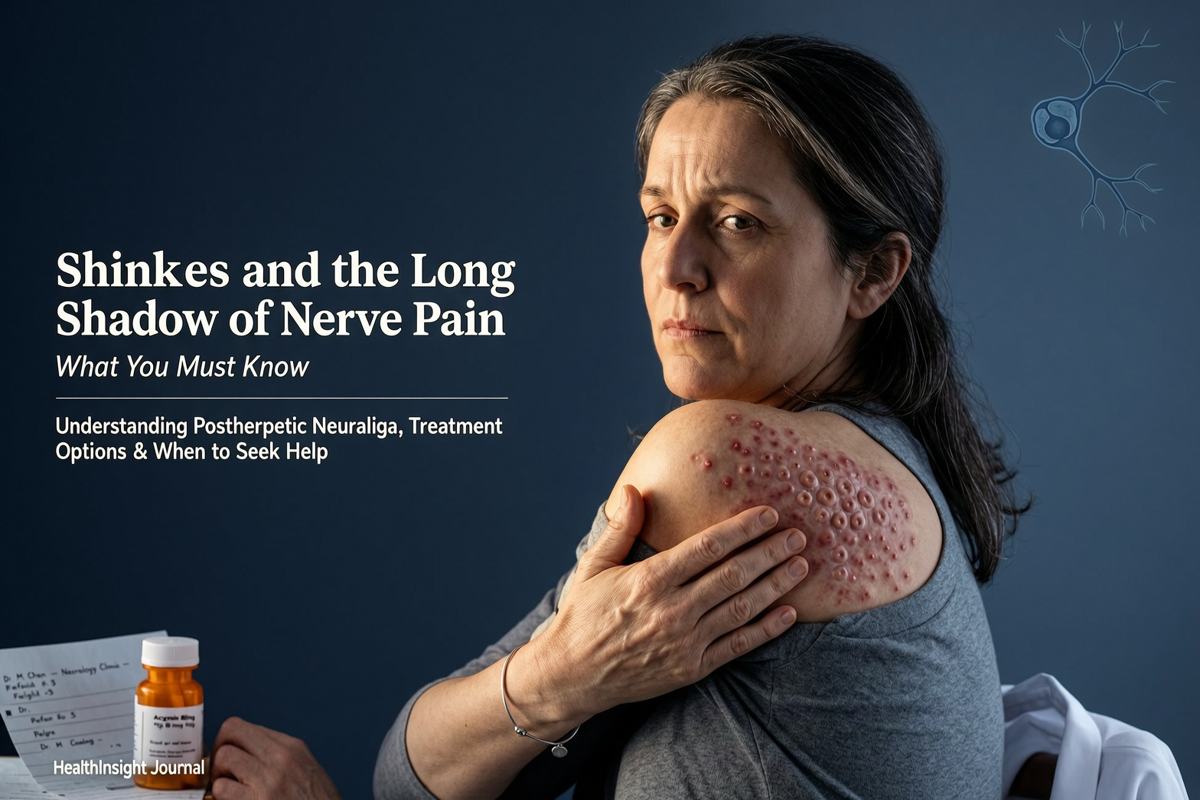
Shingles and the Long Shadow of Nerve Pain: What You Must Know
Shingles is more than a rash. Learn how the varicella-zoster virus reactivates, how to spot early signs, and why prompt treatment can prevent chronic nerve pain.
The Virus That Waits
If you had chickenpox as a child, you carry a silent passenger for life. The varicella-zoster virus, which caused those itchy blisters decades ago, never fully leaves your body. Instead, it retreats into nerve roots near your spinal cord and brain, where it can remain dormant for years or even decades. For most people, it stays hidden forever. But for one in three adults, the virus eventually wakes up—and when it does, it causes shingles, a painful condition that can leave a lasting mark on your health.
Shingles, also known as herpes zoster, is not just a skin rash. It is a neurological event with dermatological consequences. The virus travels along nerve fibers, causing inflammation that triggers a distinctive burning or stabbing pain, followed by a blistering rash. While the rash heals in a few weeks, the pain can persist for months or even years—a condition called postherpetic neuralgia (PHN). Understanding why shingles happens, who is at risk, and how to respond quickly can make the difference between a brief inconvenience and a chronic health battle.
Why Shingles Strikes: The Immune Connection
The varicella-zoster virus is a member of the herpesvirus family, and like its relatives, it has evolved to hide from the immune system. After the initial chickenpox infection resolves, the virus migrates to sensory ganglia—clusters of nerve cells along the spine. There, it enters a dormant state, producing very few proteins and evading immune detection.
Shingles occur when something disrupts this careful balance. The most common trigger is age. As we get older, our cellular immunity declines, a process known as immunosenescence. This natural weakening makes it easier for the virus to reactivate. About half of all shingles cases occur in adults over 60, and the risk continues to climb with each decade. But age is not the only factor. Chronic stress, fatigue, physical trauma, cancer treatments, and medications that suppress the immune system can also provoke an outbreak. Even a common cold can sometimes be enough to tip the scales.
The Wake-Up Call: Early Signs and Symptoms
Shingles does not announce itself with a rash. Most people experience a warning phase, known as the prodromal stage, which begins two to three days before any visible skin changes. The classic symptom is localized pain—often described as burning, tingling, shooting, or aching—in a specific band-like area on one side of the body or face. You may also feel hypersensitive to touch, as if the skin has been sunburned. Some people develop fever, headache, chills, or fatigue, making it easy to mistake the early stage for a flu or a muscle strain.
The rash itself is key to diagnosis. It typically appears as red patches that evolve into clusters of fluid-filled blisters. The blisters follow the path of a single nerve root, so they wrap around the torso like a half-belt or appear on one side of the face, never crossing the midline. This one-sided distribution is a hallmark of shingles. Within three to five days, the blisters begin to crust over, and the rash usually clears within two to four weeks. But the pain may linger long after the skin looks normal.
The Hidden Danger: Postherpetic Neuralgia
Postherpetic neuralgia is the most feared complication of shingles. It is defined as nerve pain that lasts more than three months after the rash has healed. The pain can be excruciating and debilitating, making it difficult to sleep, work, or even wear clothing against the affected area. For some patients, a light breeze or a gentle touch triggers intense pain—a phenomenon called allodynia. Others experience a constant burning or aching sensation that refuses to let up.
Why do some people develop PHN while others do not? The strongest predictors are age and severity. Older adults have a much higher risk; about 20% of people with shingles over age 60 will develop PHN. The risk rises to 33% for those over 80. Having severe pain during the initial shingles episode, a widespread rash, or symptoms on the face are also associated with higher odds of persistent pain. The pain originates from nerve damage caused by viral replication and the inflammation that follows. When the virus multiplies, it can destroy nerve fibers and leave abnormal signaling pathways that fire pain messages even after the infection is gone.
Complications Beyond the Rash
While PHN is the most common complication, shingles can cause other serious problems, especially when it affects the face. If the virus reaches the ophthalmic branch of the trigeminal nerve, it can lead to shingles in the eye, which may cause vision loss, scarring, or glaucoma. It is essential to see an ophthalmologist immediately if a shingles rash develops on the nose or near the eye. Shingles can also weaken muscles, leading to temporary paralysis in the face or other areas. In rare cases, it can spread internally, affecting the lungs, liver, or brain, particularly in people with compromised immune systems.
The Critical Window: Why Early Treatment Matters
The most effective way to reduce the risk of PHN is to start antiviral medication as soon as possible. Antiviral drugs such as acyclovir, valacyclovir, and famciclovir work by stopping the virus from replicating. Started within 72 hours of the rash appearing, they can shorten the duration of the outbreak, reduce the severity of pain, and lower the risk of complications. After 72 hours, antivirals may still be prescribed if new blisters are forming or if the patient is at high risk, but they are less effective. This time window is why doctors urge patients to seek help at the very first sign of a shingles rash—or even before the rash appears if they have the classic prodromal symptoms and a known exposure.
Pain management is also crucial. Over-the-counter medications like ibuprofen or acetaminophen can help with mild to moderate pain, but many patients require prescription-strength analgesics or nerve-pain medications such as gabapentin or pregabalin. These drugs calm the hyperactive nerve signals that drive the discomfort. Combining antiviral therapy with early pain control has been shown to improve outcomes and reduce the risk of long-term nerve damage.
Prevention: The Shield of Vaccination
The best defense against shingles is vaccination. The current vaccine, known as Shingrix, is a recombinant non-live vaccine that is more than 90% effective at preventing shingles and PHN. It is recommended for adults aged 50 and older, as well as for adults aged 19 and older who are immunocompromised or who will be receiving therapies that suppress the immune system. Shingrix is given in two doses, separated by two to six months. Unlike the earlier live vaccine, Zostavax, which is no longer available in the U.S., Shingrix can be used by people with certain medical conditions, and it provides stronger and longer-lasting protection.
Even people who have already had shingles should get vaccinated. The vaccine can prevent future attacks, which are possible even after a previous episode. It is also important to note that the varicella (chickenpox) vaccine for children is not a shingles vaccine, but adults who were vaccinated as children are at lower risk of developing shingles later—although the risk is not zero. For those who had chickenpox before the vaccine era, the Shingrix vaccine is the single best investment in preventing the suffering associated with shingles.
Living With Shingles: What to Expect
If you do develop shingles, there are steps you can take to manage your symptoms and prevent spreading the virus. The blisters contain active virus, so they can transmit chickenpox to someone who has never had it. Keep the rash covered, avoid scratching, and wash your hands frequently. Once the blisters have crusted over, you are no longer contagious. Cool compresses, calamine lotion, and colloidal oatmeal baths can soothe the itch and pain. Loose clothing and a quiet environment may also help reduce nerve hypersensitivity.
Most people recover fully from shingles within three to five weeks, and the pain fades as the inflammation subsides. But for those who develop PHN, the journey can be longer. Fortunately, there are many treatment options, including nerve-block injections, topical lidocaine patches, and a variety of medications that target neuropathic pain. With patience and the right medical care, even chronic post-shingles pain can be managed.
The Bottom Line
Shingles is not just an old person's problem or a passing rash. It is a complex viral infection that can cause lasting misery if ignored. The key messages are simple: know the early warning signs, seek medical attention immediately at the first sign of a rash, and protect yourself with vaccination if you are eligible. By understanding how the varicella-zoster virus behaves, you can take proactive steps to keep it from waking up—and if it does, you can minimize the damage before it casts a long shadow over your life.