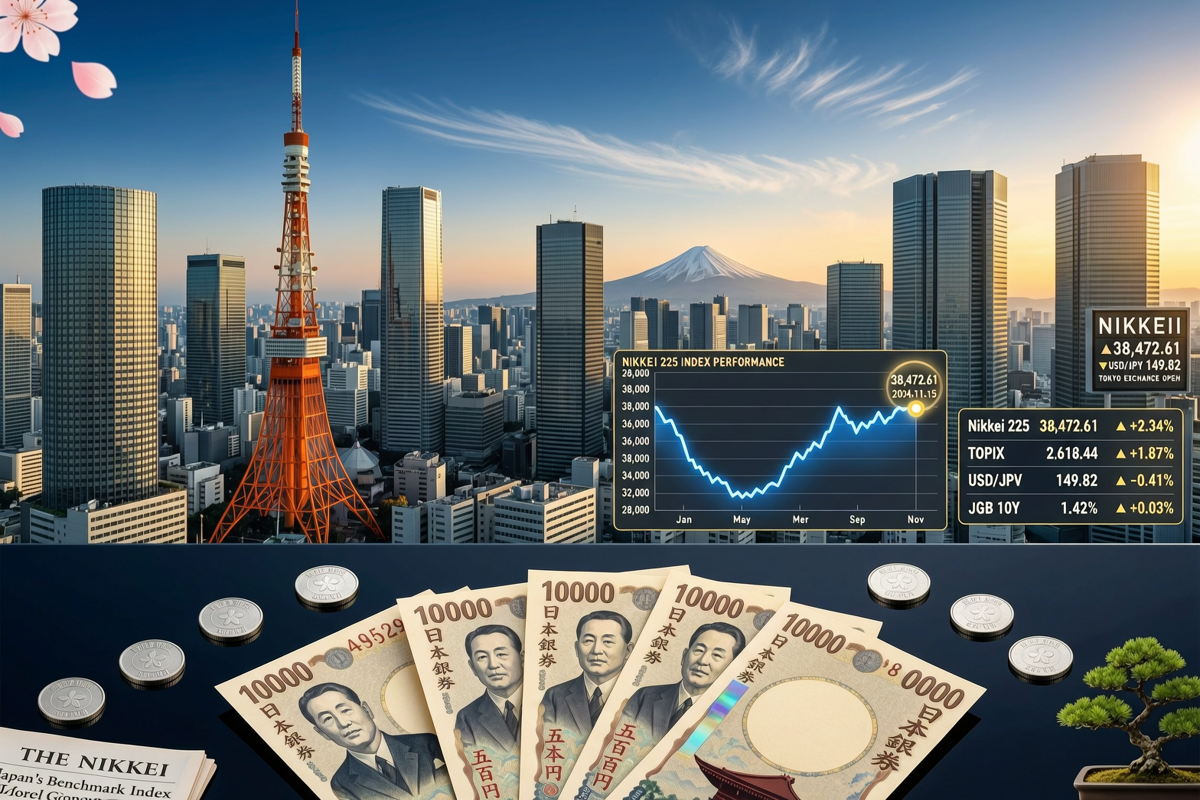
Nikkei's Resilience: Japan's Benchmark Defies Global Headwinds
Amid yen fluctuations and BOJ policy shifts, the Nikkei 225 shows remarkable strength. Explore the key drivers behind Japan's stock market performance and what lies ahead for investors.
Introduction
The Nikkei 225, Japan's premier stock index, has been a beacon of resilience in a turbulent global market. Despite headwinds from persistent inflation, geopolitical tensions, and monetary policy tightening by major central banks, the Nikkei has climbed to levels not seen in decades. In this article, we dissect the factors fueling this ascent, from Bank of Japan (BOJ) decisions to sector-specific trends, and assess the outlook for the remainder of the year.
Yen Dynamics and Corporate Earnings
A weaker yen has been a double-edged sword for the Japanese economy. On one hand, it bolsters the competitiveness of exporters like Toyota, Sony, and Nintendo, boosting their earnings when repatriated. On the other, it raises import costs, squeezing domestic consumption. The yen has depreciated significantly against the US dollar, trading around 150 yen per dollar in late 2024. This depreciation has been a primary catalyst for the Nikkei's rally, especially for large-cap exporters.
Impact on Exporters
Japanese multinationals have reported robust profits, largely attributed to favorable currency effects. For instance, Toyota revised its full-year earnings guidance upward after a strong first half. Similarly, technology giants like Tokyo Electron and Advantest benefited from global semiconductor demand, which, combined with a weak yen, pushed their shares to record highs.
BOJ's Accommodative Stance
While the Federal Reserve and European Central Bank have aggressively raised rates, the BOJ under Governor Kazuo Ueda has maintained a cautious approach. The BOJ has kept its key short-term rate at -0.1% and allowed the 10-year bond yield to rise only gradually to around 1%. This divergence in monetary policy has made Japanese equities attractive compared to higher-yielding alternatives, prompting foreign investors to flock to Tokyo.
Corporate Governance Reforms
Regulatory changes have also played a pivotal role. The Tokyo Stock Exchange's push for better capital efficiency, including demands for companies to share plans for improving price-to-book ratios, has led to increased buybacks and dividends. The Nikkei has seen a rush of share-repurchase announcements, further supporting prices.
Sector Performance and Leadership
The rally has been broad-based, but certain sectors have outperformed. Technology stocks have been standout performers, driven by AI-related spending and chip demand. The pharmaceutical and healthcare sectors also gained on aging demographics and steady domestic demand. However, banking stocks have lagged due to the BOJ's yield curve control policy, which caps lending margins.
Cyclical vs. Defensive
During periods of yen volatility, investors rotated between cyclical and defensive stocks. As the yen weakened, auto and machinery stocks surged. Conversely, when the yen strengthened temporarily, retail and real estate stocks attracted interest. This dynamic trading pattern has kept volumes high and volatility elevated.
Global Context and Risks
Despite its relative strength, the Nikkei is not immune to external shocks. A potential recession in the US or a deeper slowdown in China could dampen export demand. Additionally, any sudden reversal in the yen – perhaps from BOJ intervention or a surprise policy shift – could trigger sharp corrections. Geopolitical risks, such as tensions in the Taiwan Strait, also loom over Japanese equities given their reliance on regional trade.
Valuations and Future Catalysts
After the rally, the Nikkei's price-to-earnings ratio has expanded, raising concerns about overvaluation. However, improved corporate profitability justifies some of the premium. Key catalysts to watch include the BOJ's October meeting, where it may provide guidance on tapering bond purchases, and the US presidential election, which could impact trade policies.
Investment Strategies for the Nikkei
For investors looking to play the Nikkei rally, several strategies exist:
- Direct Index Funds: ETFs tracking the Nikkei 225 offer diversified exposure at low cost.
- Currency-Hedged Products: To minimize yen risk, consider hedged ETFs that neutralize currency fluctuations.
- Sector-Specific Plays: Focus on high-growth areas like semiconductors or automation, which benefit from structural trends.
- Dividend Aristocrats: Companies with consistent dividend growth provide income and stability.
Conclusion
The Nikkei 225's resilience reflects a confluence of favorable factors: a weak yen, supportive BOJ policy, corporate reforms, and robust global demand for Japanese goods. While risks exist, the index appears well-positioned to continue its upward trajectory, albeit with occasional volatility. As always, investors should remain vigilant, diversify, and consider the unique dynamics of the Japanese market. The Nikkei's journey is a testament to Japan's adaptation amid global challenges, offering lessons for markets worldwide.