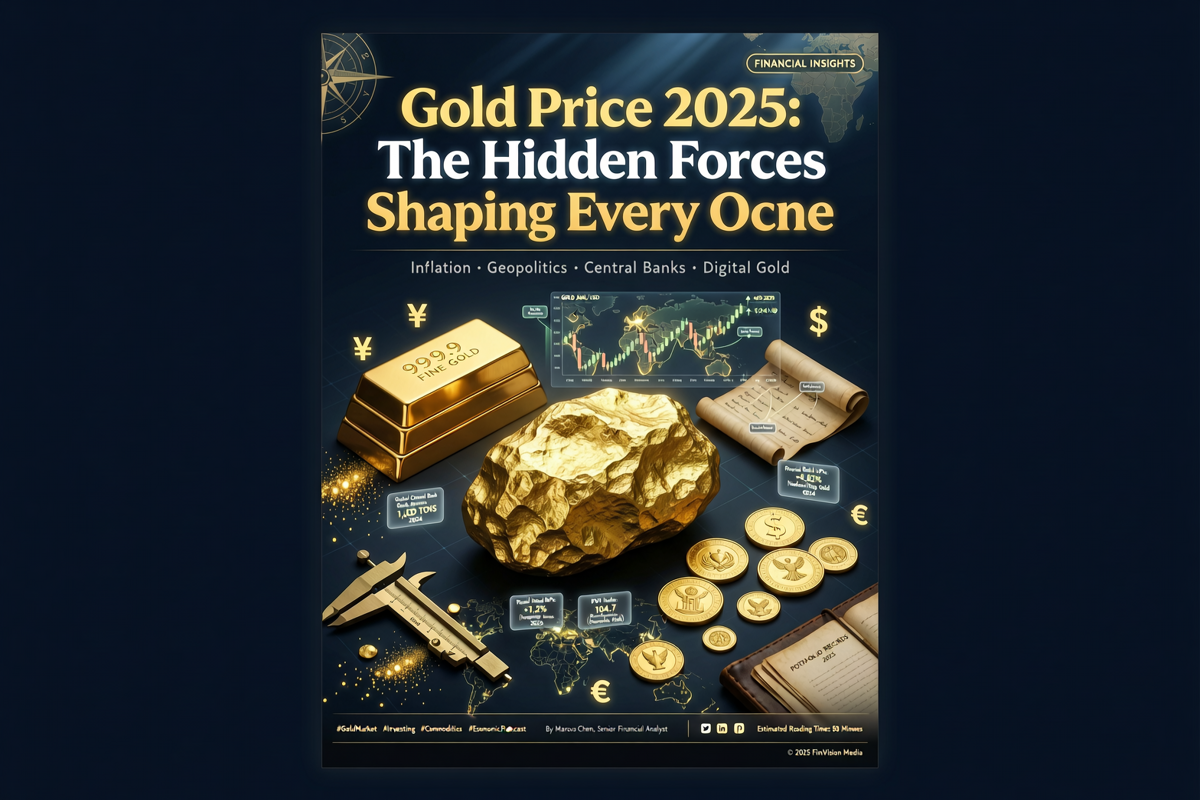
Gold Price 2025: The Hidden Forces Shaping Every Ounce
What truly drives the gold price in 2025? Uncover the roles of central bank buying, real yields, and geopolitics - and learn smart trading strategies.
In the world of precious metals trading, the gold price is the ultimate heartbeat of global uncertainty. But behind every yellow candle on your screen lies a complex web of monetary policy, institutional greed, and age-old fear. Understanding the hidden forces that move gold isn't just for analysts - it's the difference between making a calculated trade and chasing noise.
Central Banks: The New Gold Heavyweights
Over the past several years, the most consistent and potent buyers in the gold market haven't been retail investors or jewelry fans - they've been the world's central banks. According to data from the World Gold Council, central banks have been accumulating gold at record levels, with 2024 marking the third consecutive year of purchases exceeding 1,000 metric tons. This is not a random trend. Sanctions on Russia, concerns over US dollar weaponization, and a desire to diversify reserve assets have pushed monetary authorities from Beijing to Ankara toward gold.
Why does this matter for your trading? Because central bank buying puts a firm floor under the gold price during periods of market stress. When institutions with unlimited balance sheets are accumulating, any dip toward critical support levels tends to attract their buying interest. As a trader, you need to watch official-sector announcements, especially from China and India, because their pace of accumulation can signal long-term direction even when short-term sentiment is fickle.
The Real Yield Puzzle: Gold's Invisible Puppeteer
Perhaps the most underappreciated driver of gold price is the real yield - the return you get on inflation-protected bonds like TIPS. Gold pays no interest, so when real yields are high, holding gold carries a significant opportunity cost. Investors would rather park money in assets that generate income. Conversely, when real yields crumble, gold becomes far more attractive. The relationship is inverse and often remarkably tight.
In 2025, with the Federal Reserve pausing its rate-cutting cycle and inflation simmering above the 2% target, real yields sit in a delicate zone. Any surprise in the Consumer Price Index or a jobless claim report can send real yields tumbling, ripping gold price higher. To trade this, keep your economic calendar open on every data release, and watch the 10-year TIPS yield as your canary in the coal mine. If real yields break lower, expect gold to respond - sometimes violently.
Geopolitics: Fear as a Currency
Gold has always been a safe-haven asset, but the nature of its geopolitical premium has evolved. It's no longer simply about wars and hijacked oil tankers. Modern gold price spikes now reflect de-dollarization narratives, election outcomes, and trade embargoes. When the US freezes the assets of an entire nation, every non-aligned central bank gets the message: gold is the only reserve asset without a counterparty risk.
For traders, the lesson is to stay nimble on headlines. A startling Iranian drone strike or a surprising tariff decision in Washington can trigger sudden, sharp moves in gold. Yet these moves are often overextended and revert quickly. The key is not to chase geopolitical news blindly. Instead, position yourself before major events with defined risk - or watch from the sidelines if the picture is too cloudy.
The Dollar Paradox: When Correlations Break
Conventional wisdom says that gold and the US dollar move in opposite directions. A stronger dollar makes gold expensive for foreign buyers, dampening demand. But in 2025, that correlation has become increasingly unreliable. There are times when both gold and the dollar rally together - a signal of global stress where the US economy looks like the least ugly house in a burning neighborhood.
Take the regional banking scare of 2023. The dollar strengthened on safe-haven flows, while gold also jumped because investors feared credit contagion. That paradox caught many traders off guard. The solution? Don't rely on a single correlation. Watch the dollar index, but also monitor credit spreads, volatility indices, and central bank swap lines. When gold and the dollar decouple from their historical pattern, it's telling you that fear is swirling faster than money can rotate.
Technical Trading: How to Ride the Gold Wave
Fundamentals set the stage, but execution happens on the charts. Gold is one of the few assets where technical analysis shines, because the market is extraordinarily liquid and moves in recognizable trends. Here are a few levels and patterns every trader should track:
- Moving averages: The 50-day and 200-day simple moving averages are the line in the sand for many large funds. A golden cross can trigger massive momentum buying.
- Support and resistance: Round numbers like $2,000 and $2,500 are psychological magnets. Watch price action at those levels - a clean breakout often leads to a fast run toward the next integer.
- RSI and Momentum: Gold tends to stay in overbought territory during strong bull markets. Don't fade a hot RSI prematurely; instead, wait for a bearish divergence on the daily chart.
- Seasonality: In many years, gold bottoms in June and rallies into the autumn as Indian wedding demand and Chinese holiday buying kick in. But seasonality is just a lean, not a law.
For a typical breakout strategy, wait for a daily close above a key resistance level on above-average volume. Then, set your stop loss below the breakout candle, and trail as the trend progresses. Gold's volatility can shake out the timid, so keep your position size rational.
Practical Ways to Trade Gold in 2025
- Gold ETFs: The simplest way to gain exposure, with high liquidity and no storage worries. Popular options include GLD and SGOL.
- Futures contracts: For more aggressive traders, COMEX futures offer leverage, but they require careful margin management. Never risk more than 2% of your account on a single trade.
- Options: Gold options let you limit your downside while preserving upside potential. A long call is a popular way to bet on a rally without risking a margin call.
- Physical gold: Coins and bars are best for long-term wealth preservation, not short-term trading. Transaction costs are often high, so they suit investors, not day traders.
Each vehicle has its own nuances. ETFs trade in normal stock hours, while futures run nearly 24/7. If you're new to gold, start with a paper trading account to test your instincts before risking capital.
Risk Management: The Forgotten Half
The gold market can be brutal, especially when economic data shocks the system. A single US jobs report can swing the gold price by dozens of dollars in minutes. That's why risk management is more important than entry precision. Use stop losses, trade a fixed fraction of your capital, and avoid adding to a losing position out of spite. The best gold traders aren't the ones with the greatest forecasts - they're the ones who survive the inevitable stretches of volatility.
Always monitor the dollar index, real yields, and central bank statements daily. Set up alerts for key data releases like CPI, PCE, and non-farm payrolls. And remember that gold is a global asset, so overnight gaps are possible. If you're trading futures, consider reducing your position size before major overnight events.
The Verdict for 2025
Gold price is not a simple bet on inflation or fear. It's a collision of multiple forces - central bank buying, real yields, geopolitical risk, and the dollar's path - all interacting in real time. For traders who take the time to understand those forces, gold offers extraordinary opportunities. For those who just guess, it offers quick lessons in humility.
The smart play for 2025: respect the trend, wait for clean entries on pullbacks, and never abandon your risk discipline. Gold has been quietly carving out a longer-term uptrend, but volatility will remain your greatest challenge and your greatest gift. Master the hidden forces, and the yellow metal becomes less a mystery and more a map.